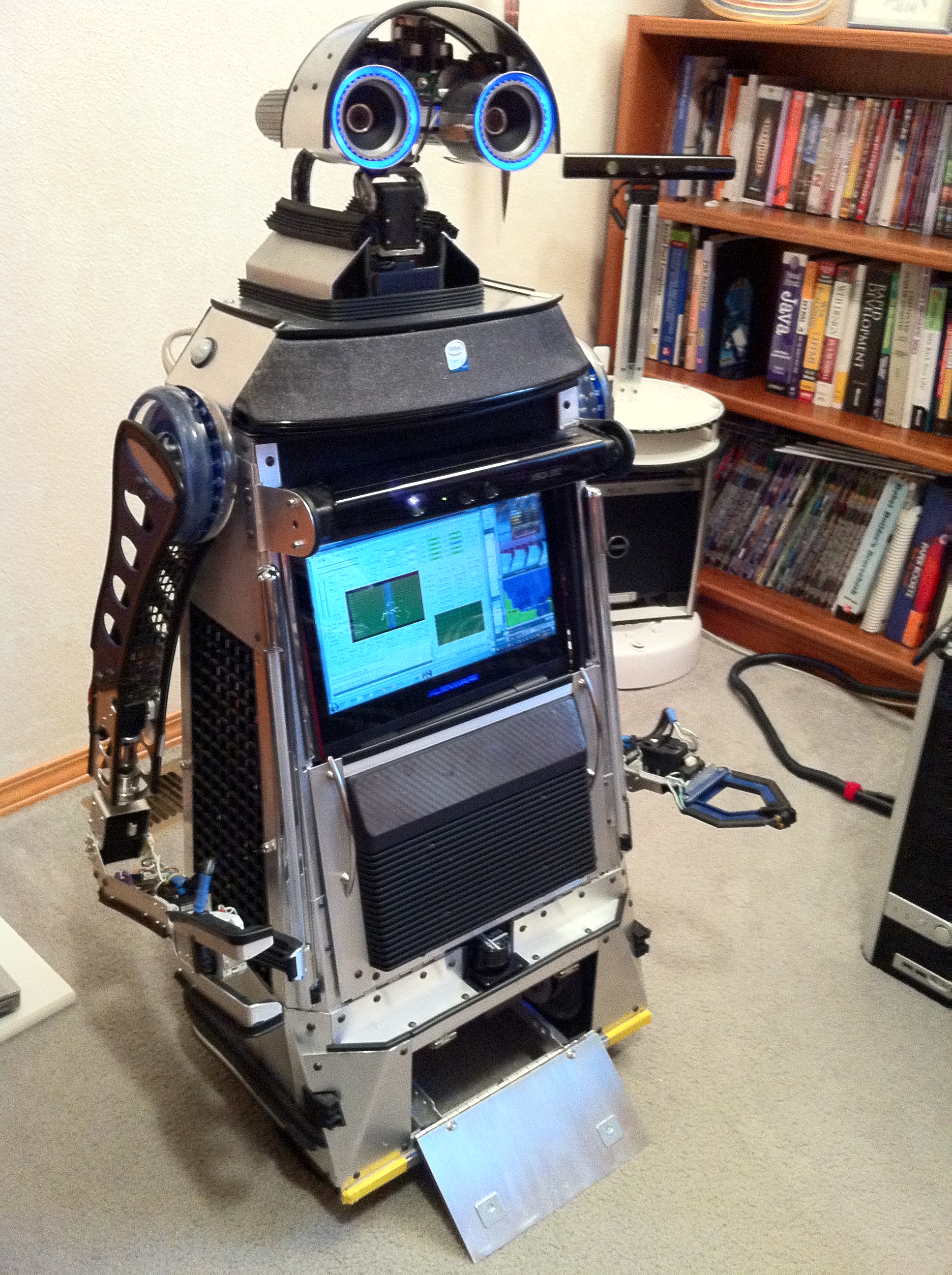
I love your robot. I am trying to build a robot of my own for a project at USF. I have been trying to get the questions correct but I end up with something like 71/2 nm of torque needed for the motors to drive the whole thing lol. Somehow I think my calculations are a bit off. Could you steer me in the right direction. How much does your robot weigh? How much torque did you need for the motors? How fast can he go top speed? Hate to hit you with so many questions but any assistance would really help put me on the right track and would be greatly appreciated.
It’s been a long time since I did the motor calculations, but here’s what I did. I am doing these off the top of my head, so not sure I got this perfect…
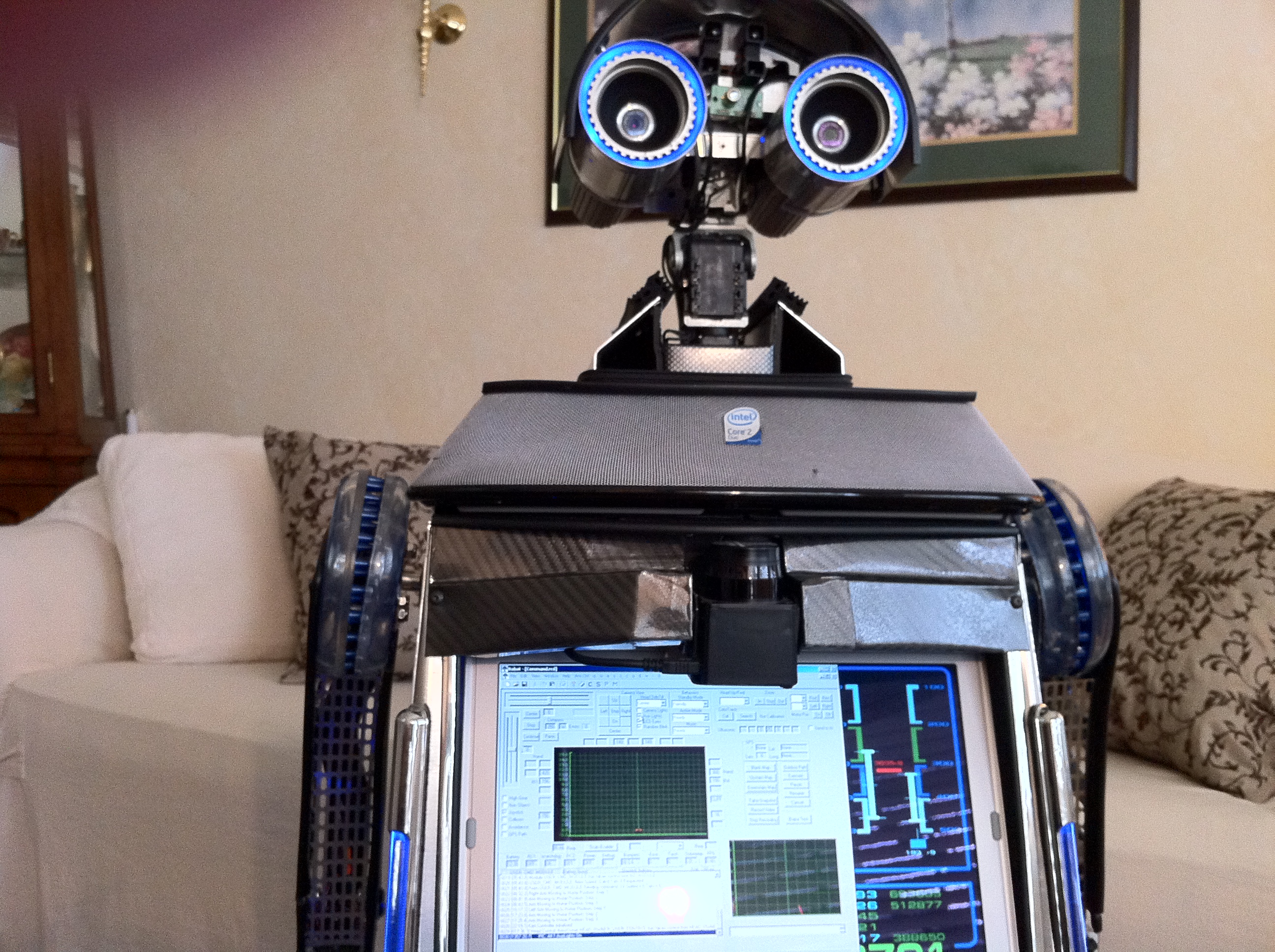
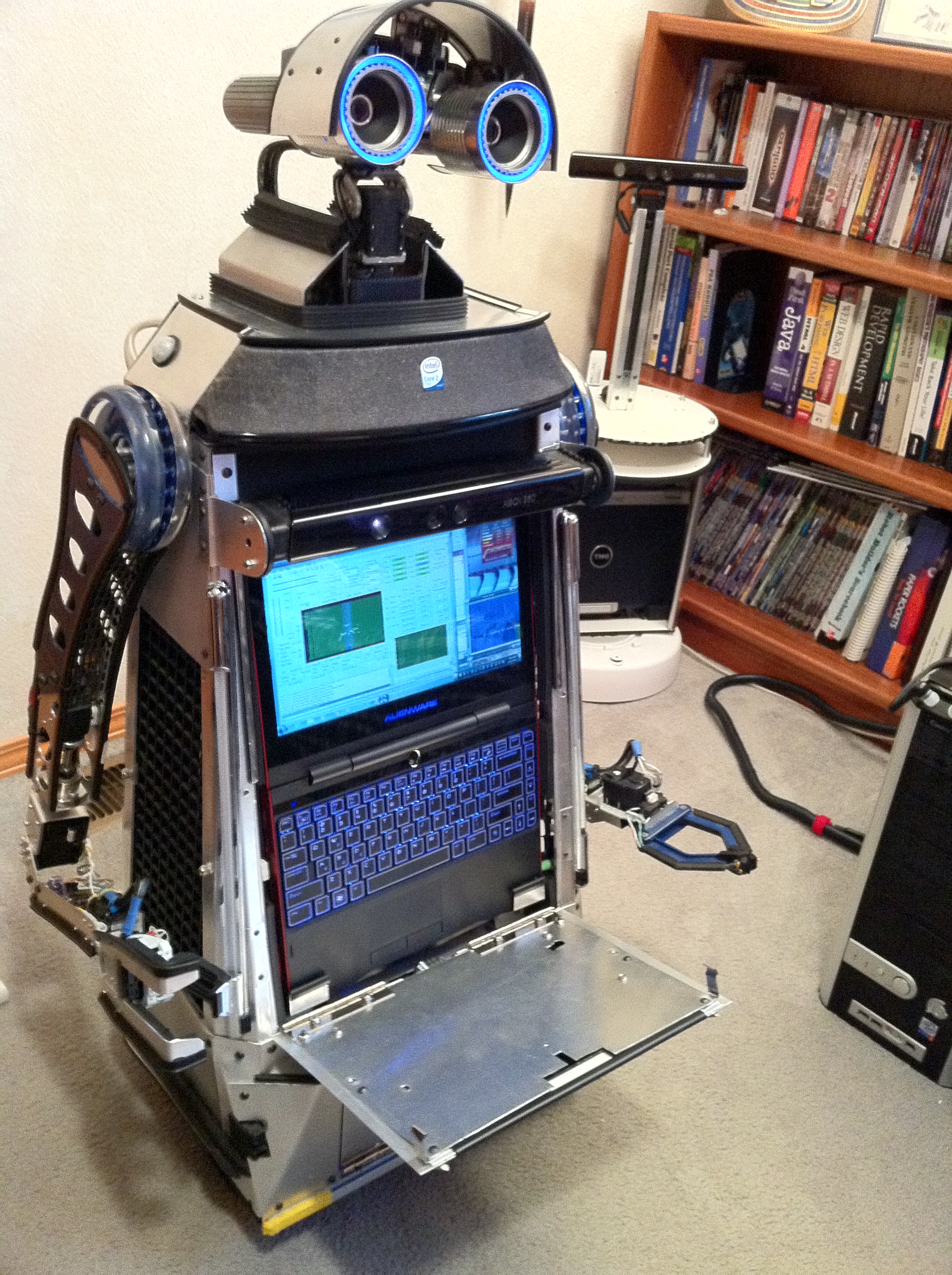
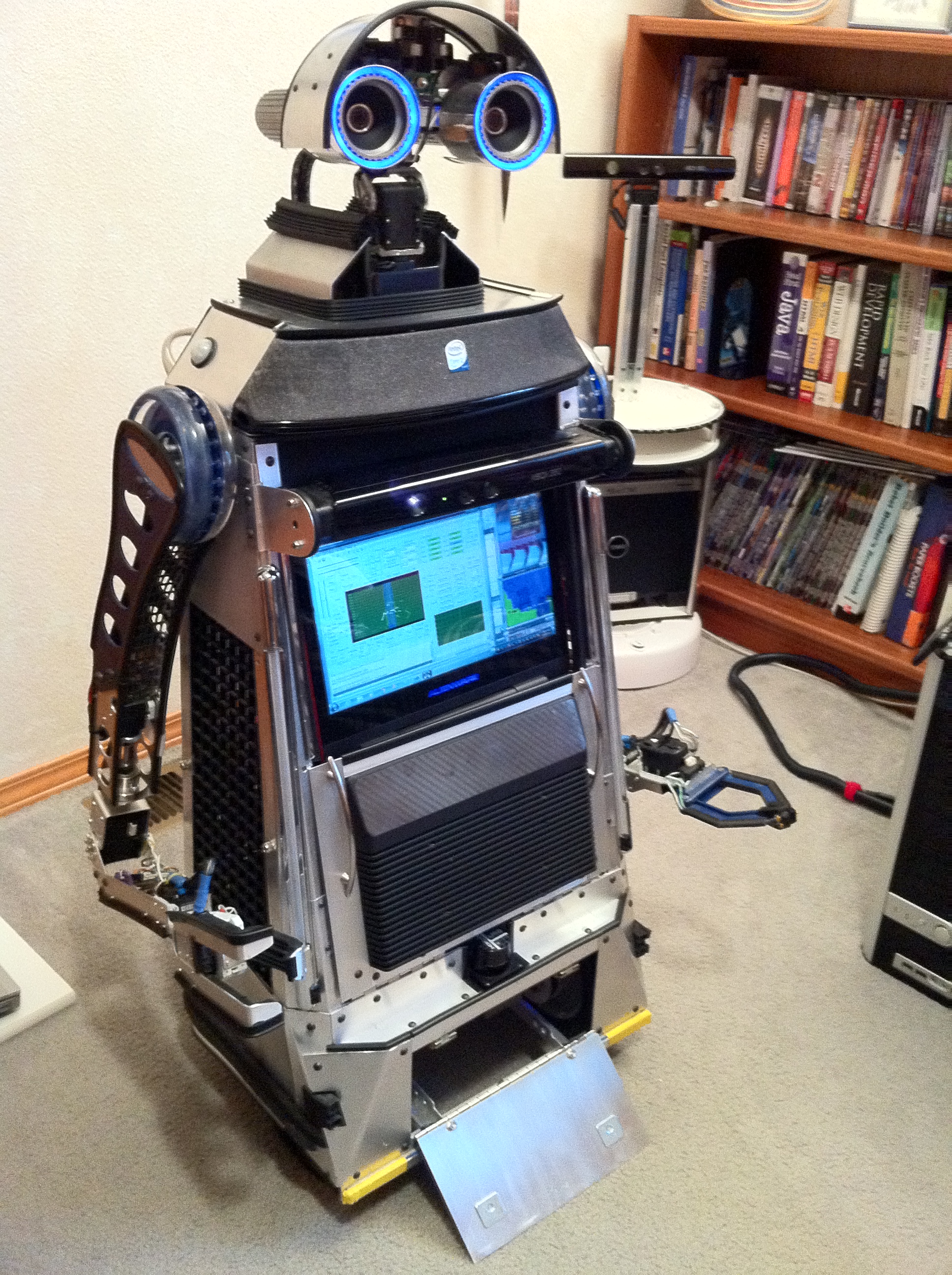
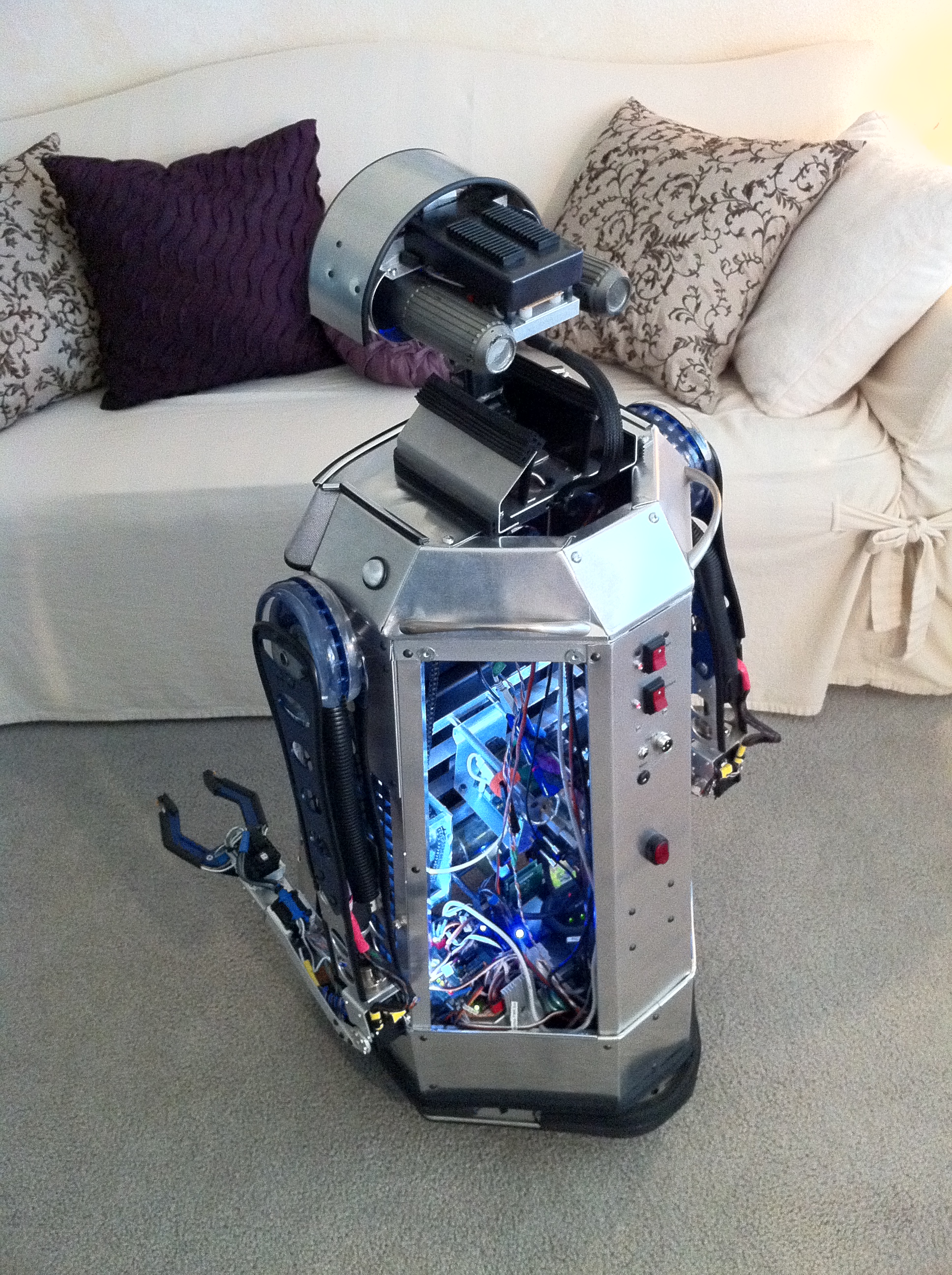
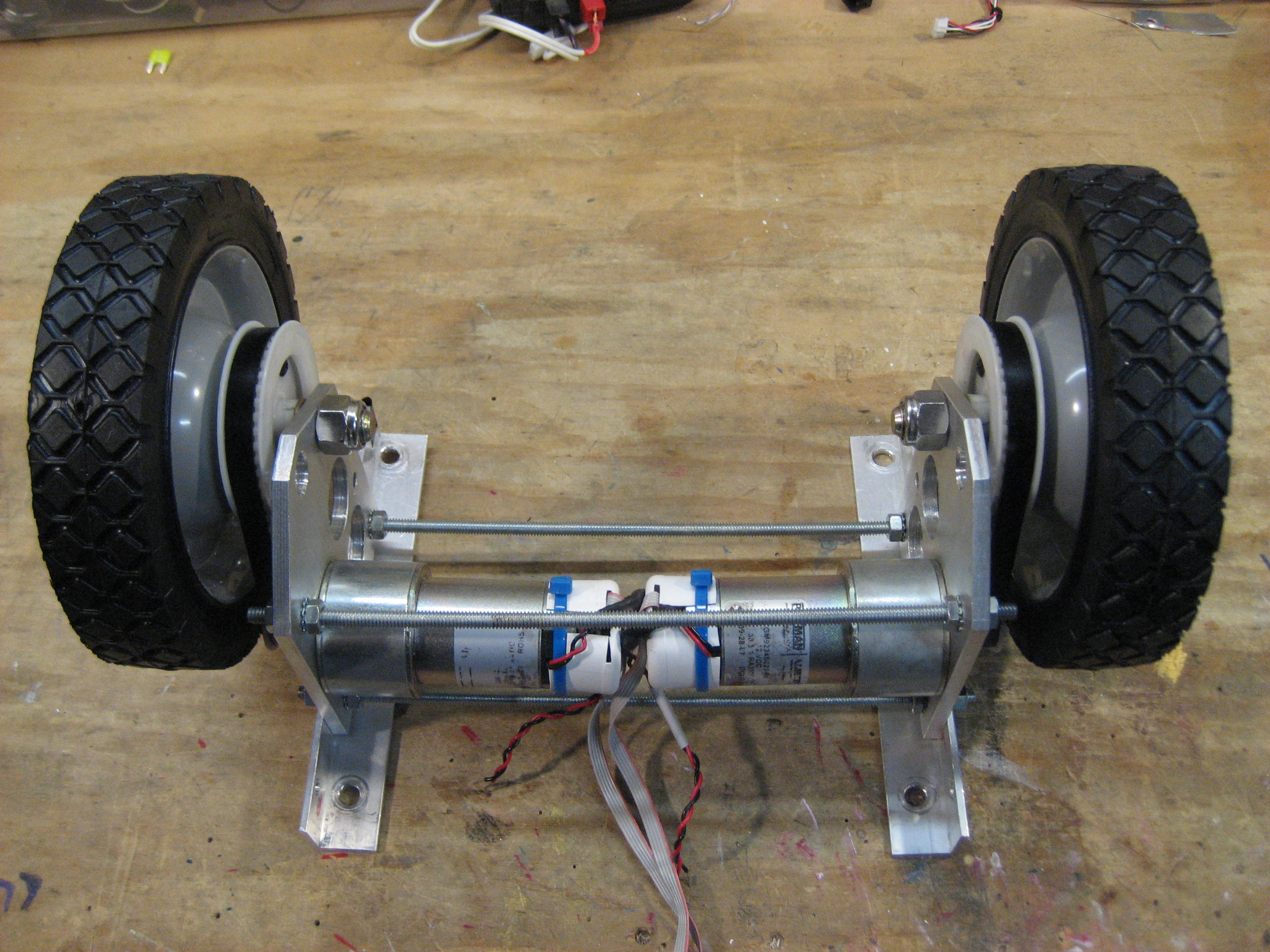
I started with the speed in mind and worked backward from there. So, I started by Googling “how fast does a person walk”.. I got “2.5 – 3 miles per hour.” I converted 2 MPH to inches per minute. I have 7 inch wheels, so I calculated the circumference, which gave me Rotations Per Minute of the wheel:
2 miles/hour * 63360 inches/mile * 1hour/60min = 2112 inches per minute
Circumference = 43.98 inches, so RPM = 2112 / 44 = 48 RPM max, so 40 – 80 RPM should work.
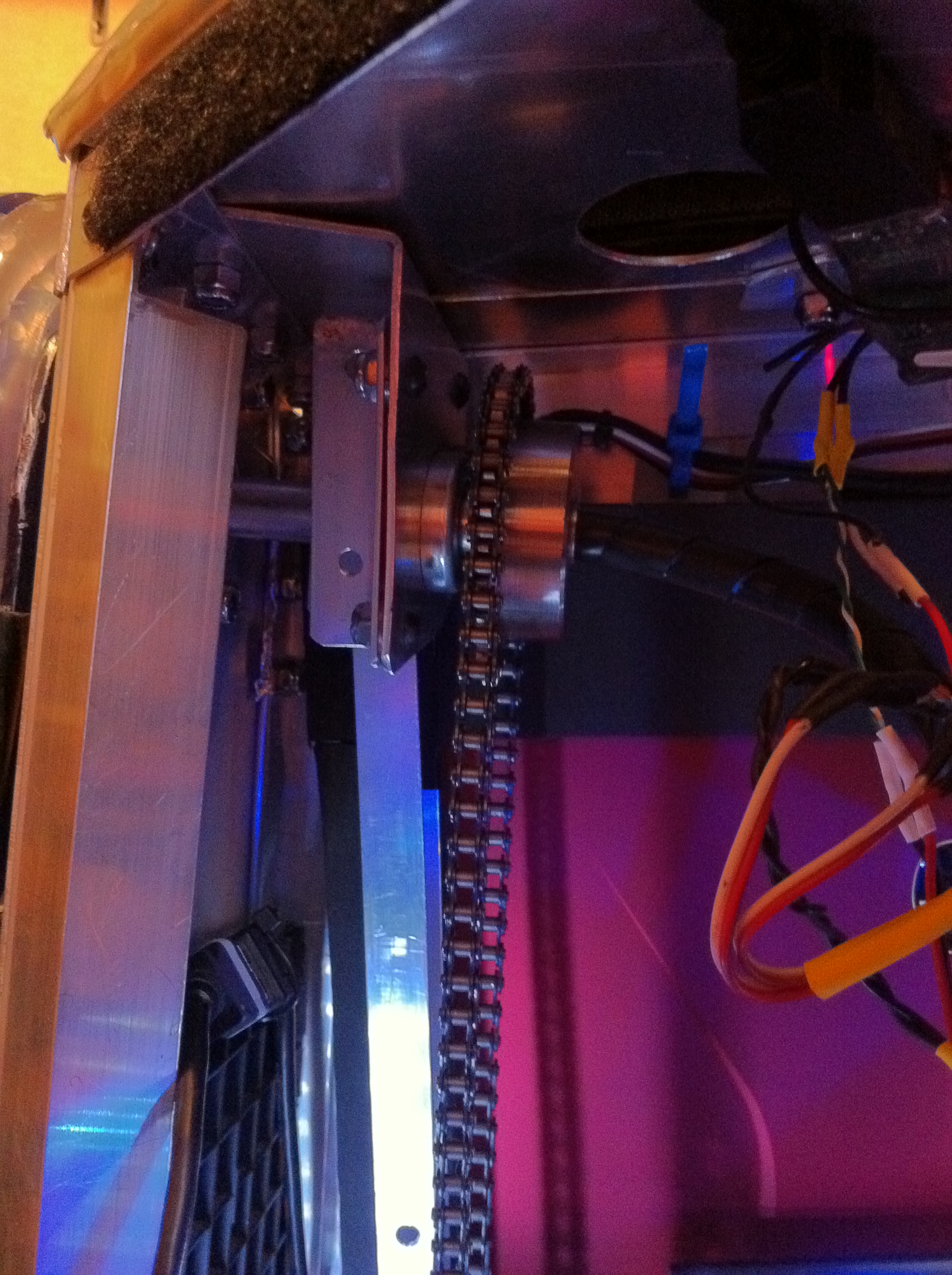
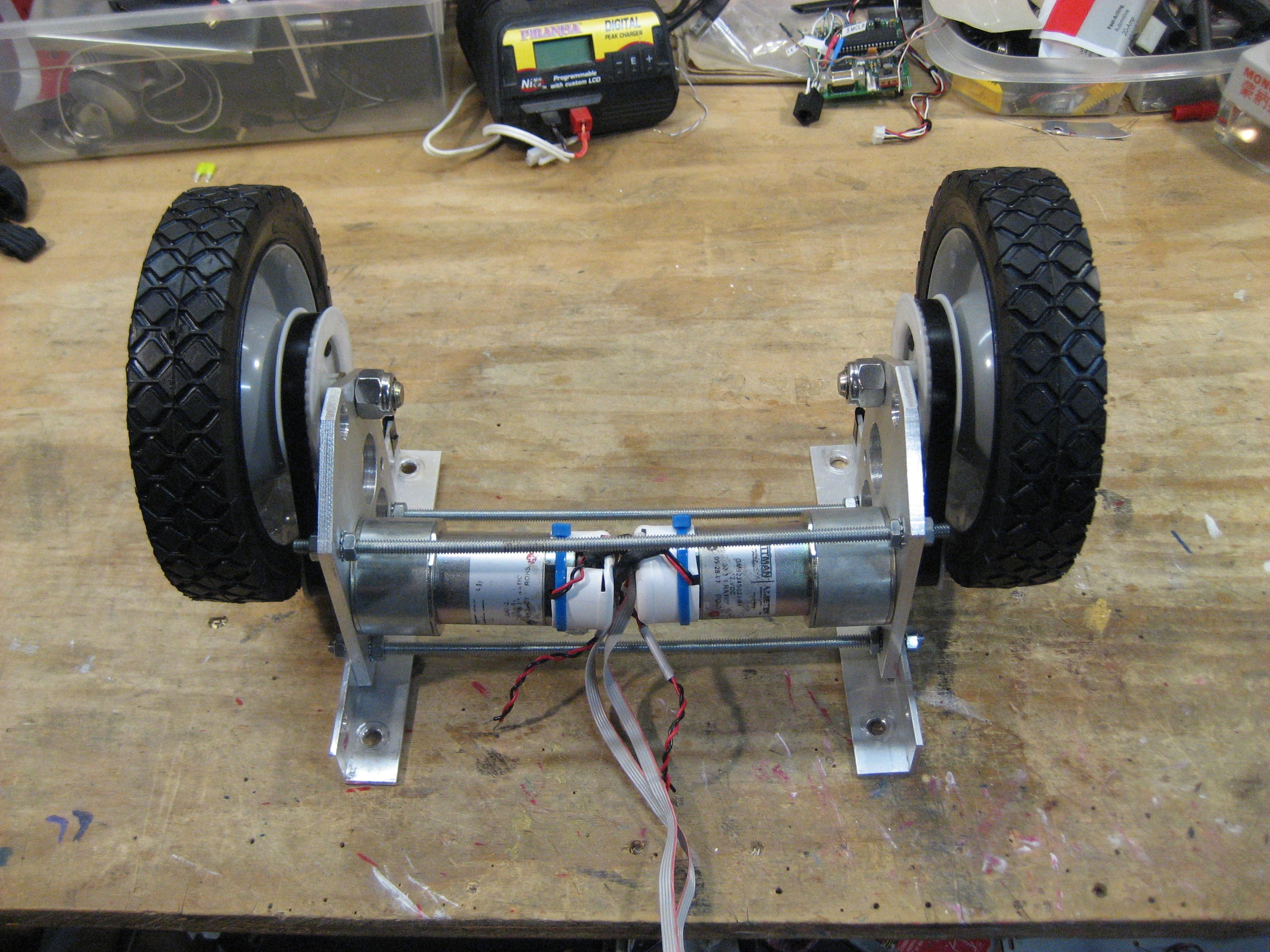
I was planning to use drive belts, so I just needed to find a motor with about the right RPM and belt cogs that gave me the right ratio to match motor to wheel speed. So, figured out that I wanted a speed of about 100 – 150 RPM, and could find cogs to match final speed (its a good idea to run the motor faster than the wheels; the belt provides some shock absorbing, saving the motor gears).
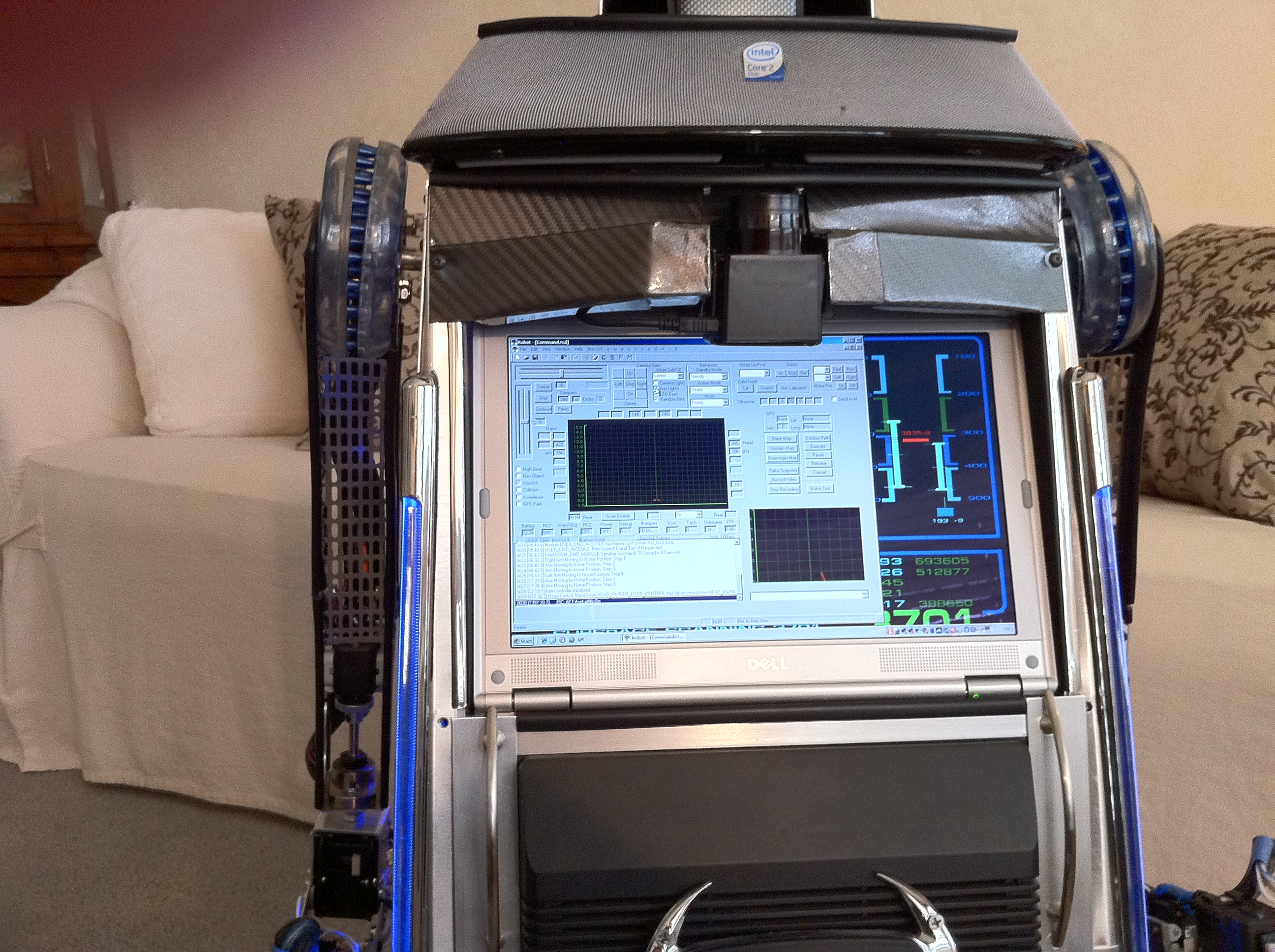
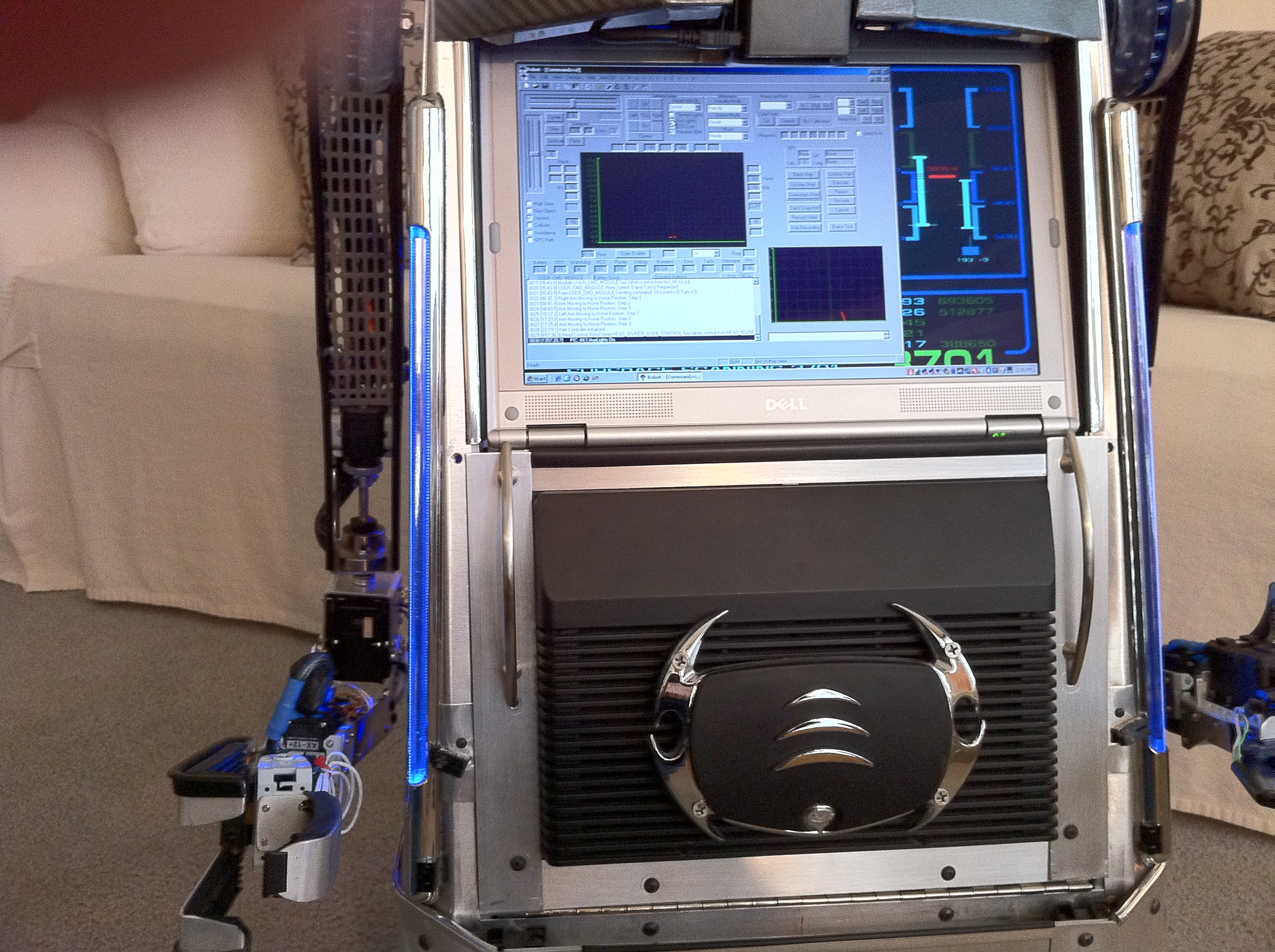
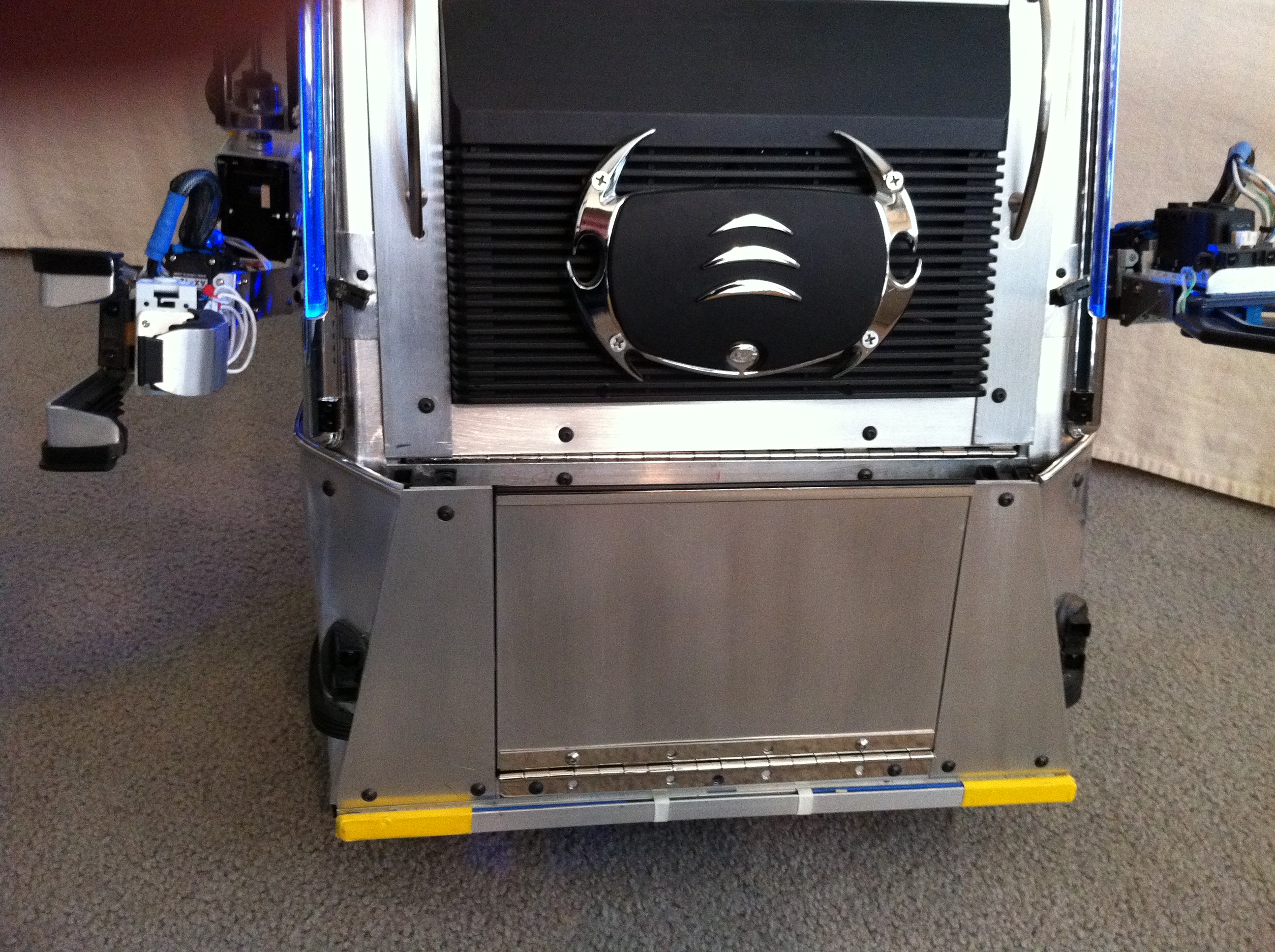
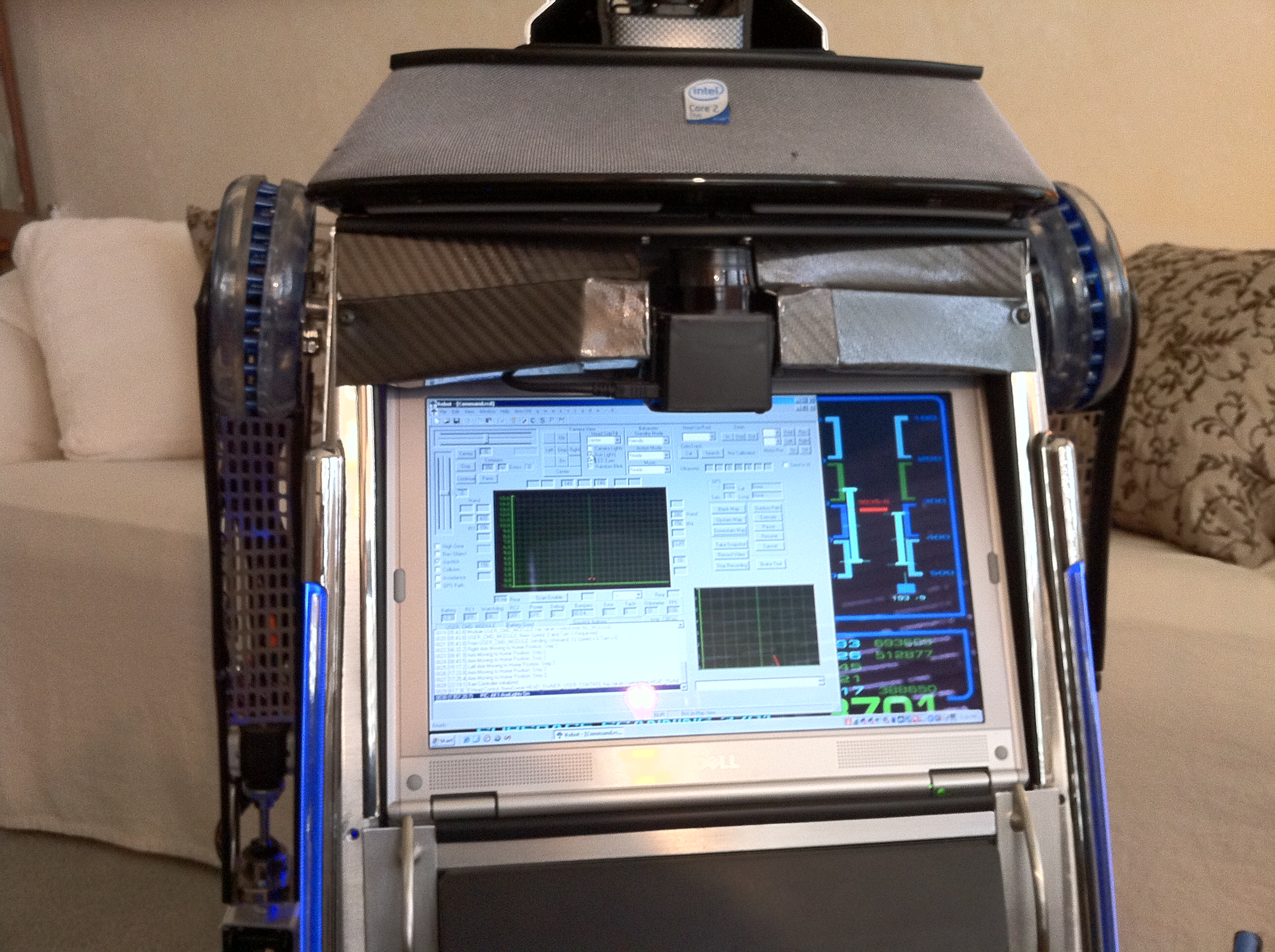
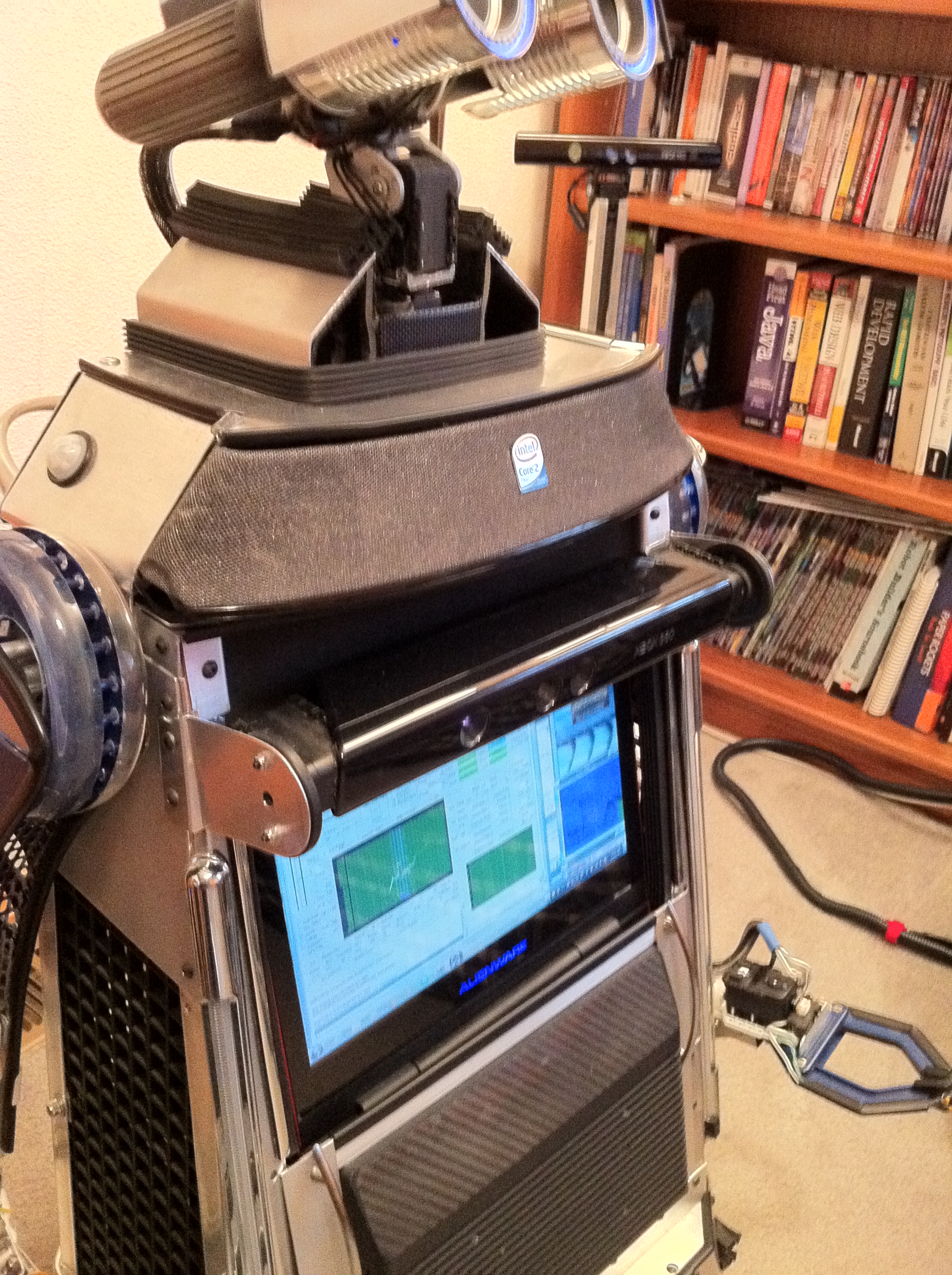
Regarding power, I cheated. I did not worry about nm of torque. My robot weights just under 80 lbs, and I know from experience I’ll need a mother that draws about 10 Amps max, when STALLED. I found a suitable motor on Ebay. It sells new for 200.00, I got 4 for $100 on eBay. A quick Google told me the specs, and I knew I could make it work:
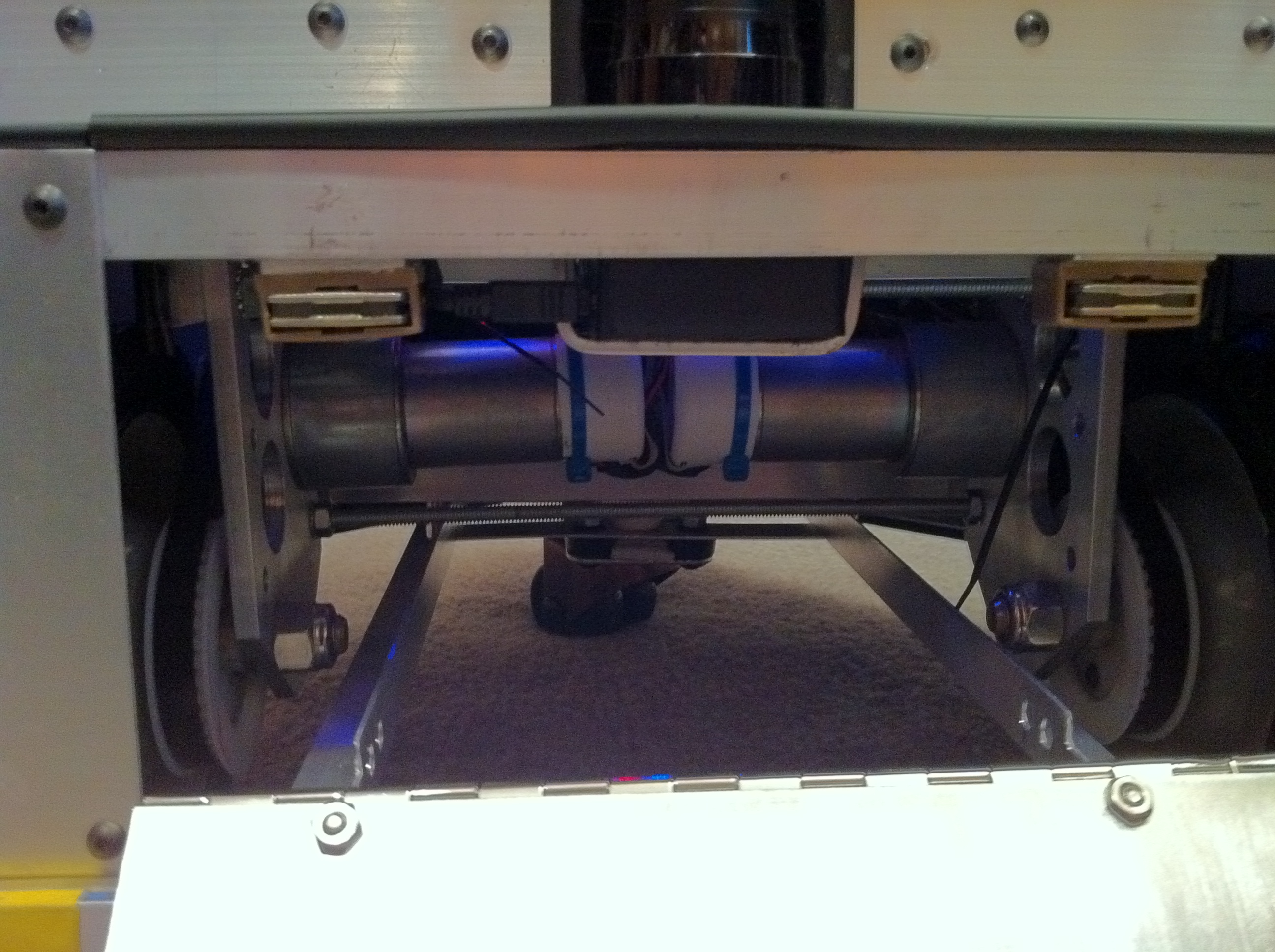
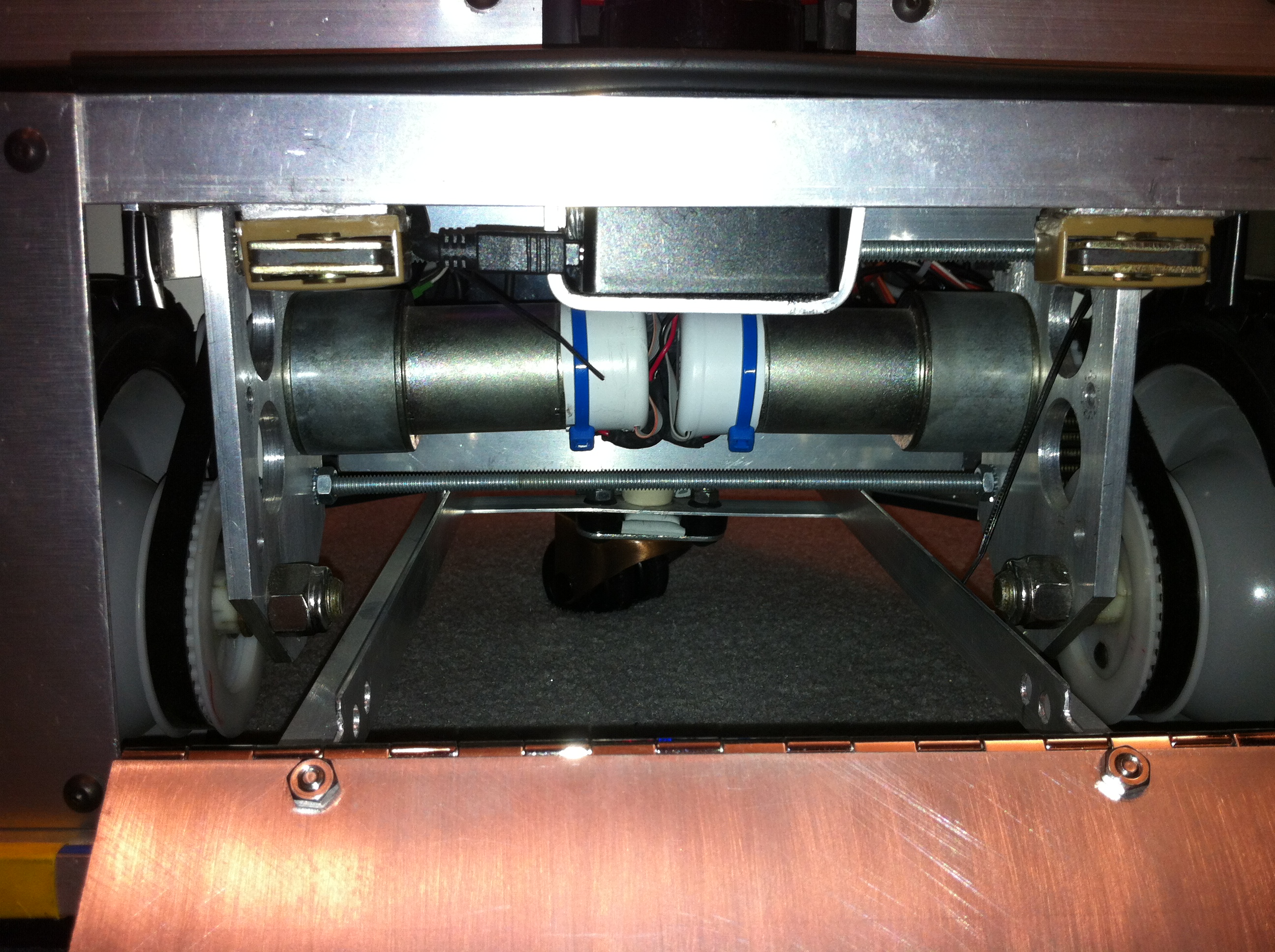
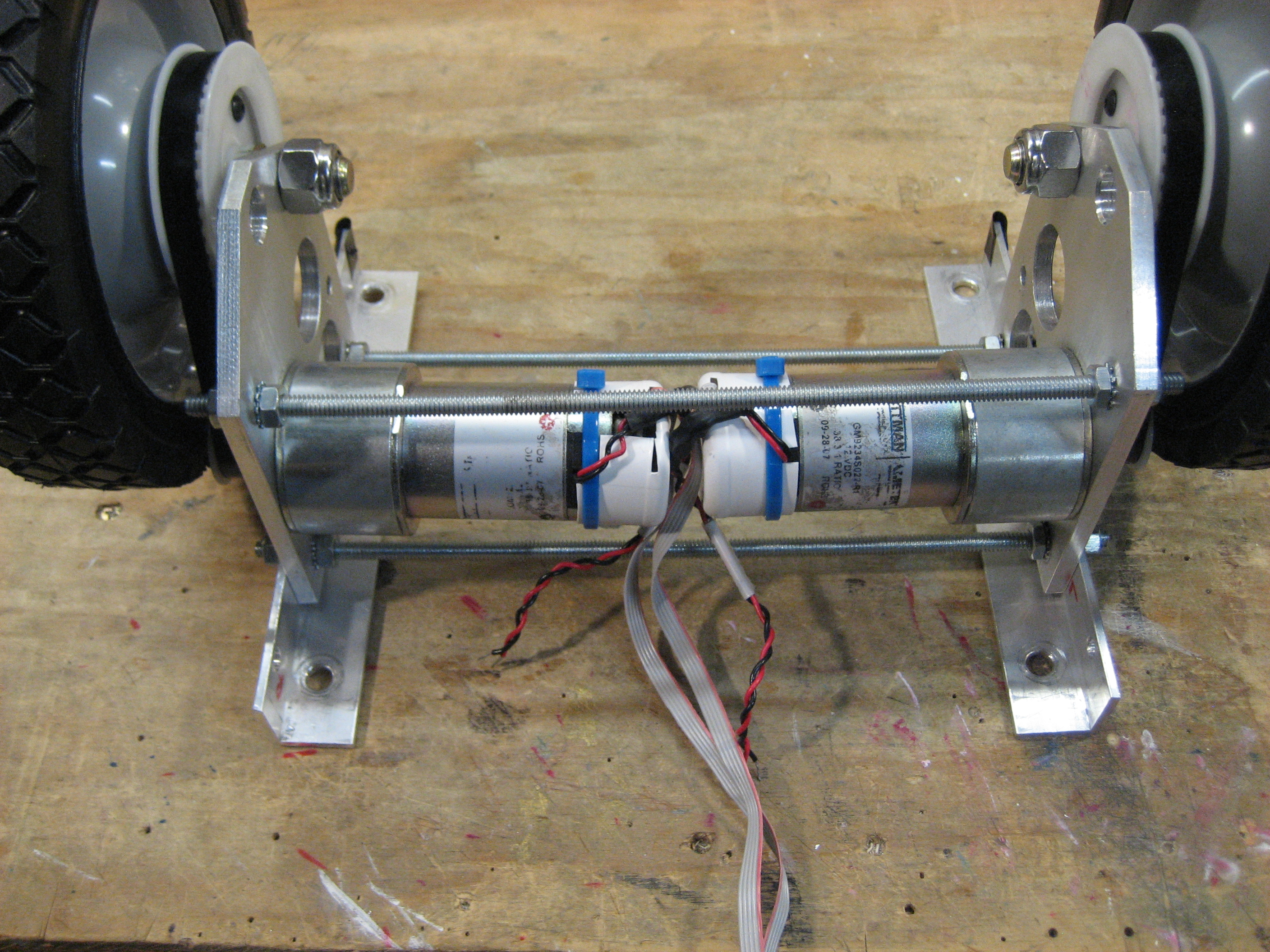
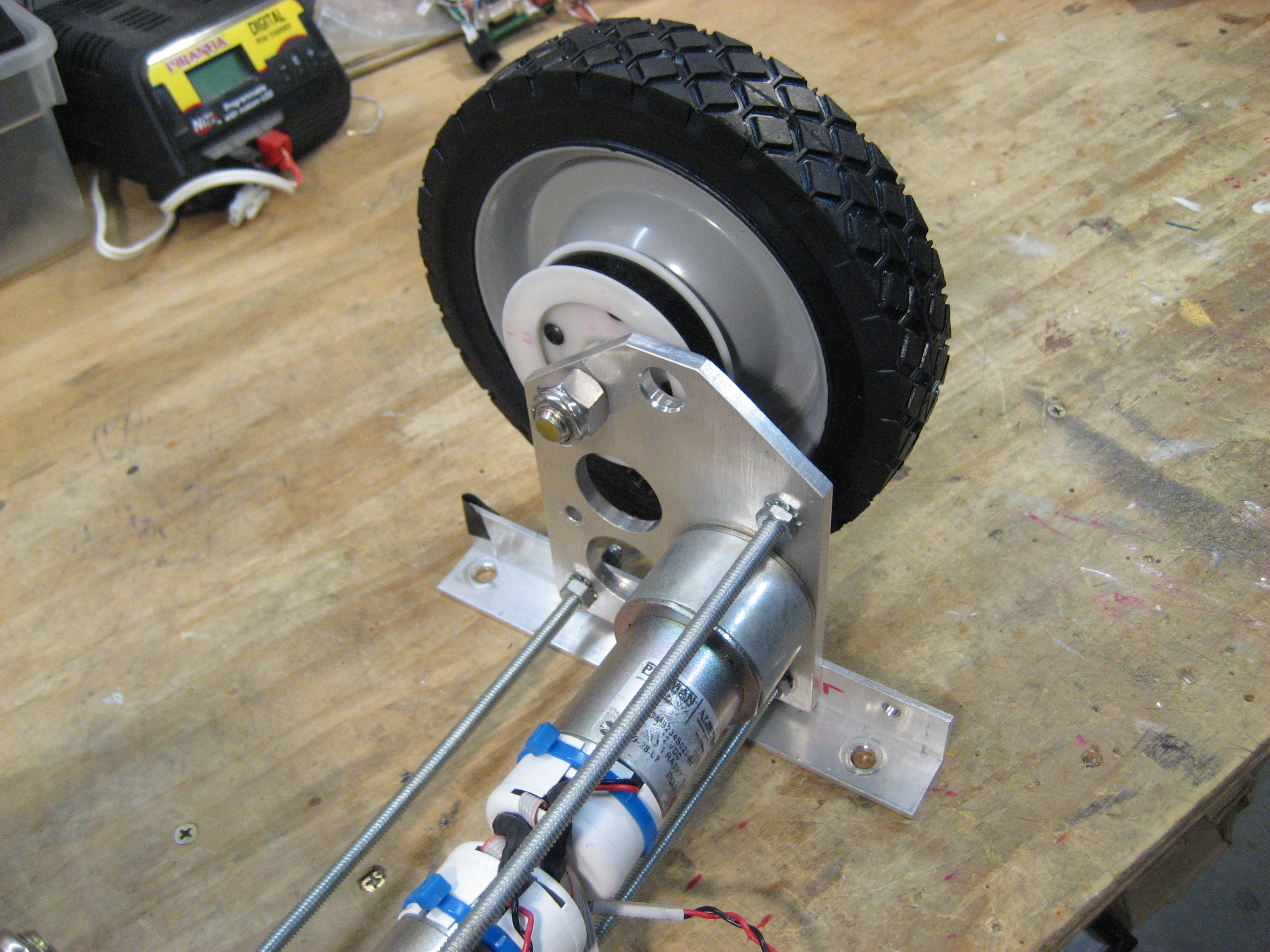
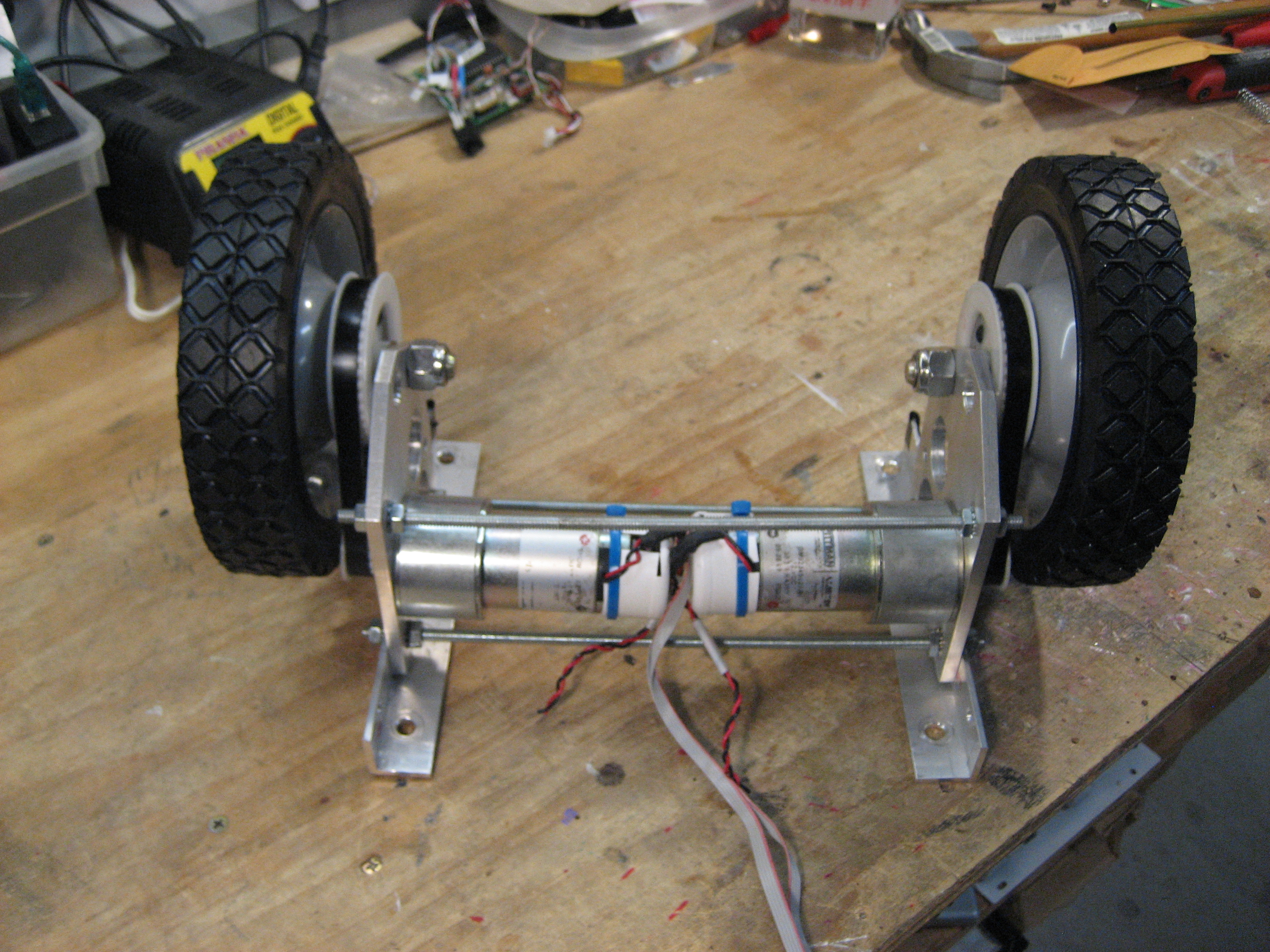
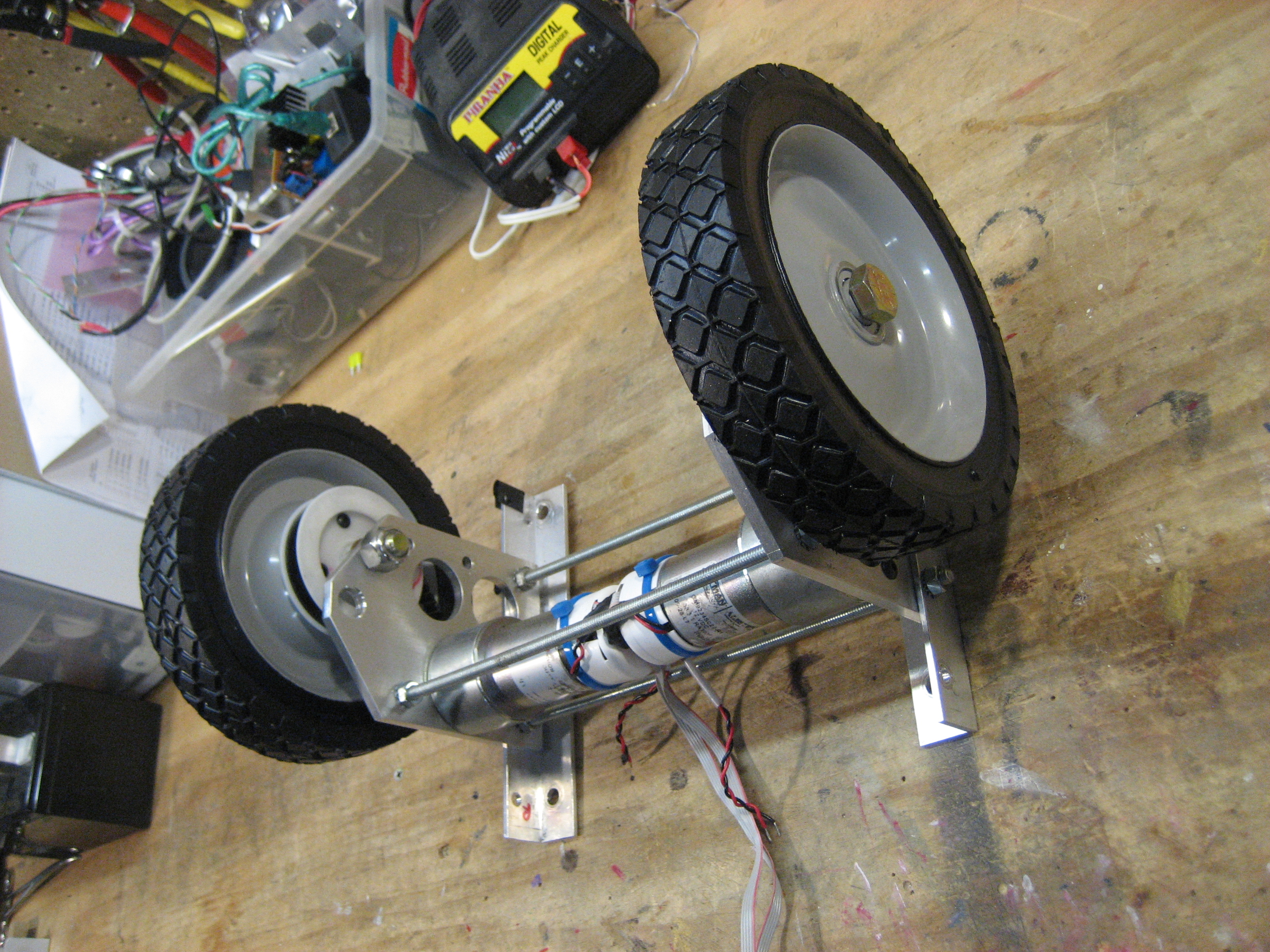
Pitmann GM9234S022-R1, 12v, 38.3:1 Gear Ratio, 127RPM, so I did a 3:1 belt – 127 RPM /3 = 42.3 RPM
Quick Google shows it’s 187 oz-in Torque at to motor, so 187 * 3 = 561 oz-in at the wheel.
Key Learnings:
If I did this over, I would go with a slightly more powerful motor, and run the wheels a little faster, to get about 4MPH, while still having enough torque for slow movements on carpet, and up ramps. (flat, hard floors are not an issue).
I find I have to wait for the robot when walking briskly. I put a “automatic speed control” in software, so going up ramps, etc. is not a problem, but would be better with a little more power. Even better if you can get one with an encoder on the motor! Since these did not have encoders, I made them.
Hello,
I love your robot. I am trying to build a robot of my own for a project at USF. I have been trying to get the questions correct but I end up with something like 71/2 nm of torque needed for the motors to drive the whole thing lol. Somehow I think my calculations are a bit off. Could you steer me in the right direction. How much does your robot weigh? How much torque did you need for the motors? How fast can he go top speed? Hate to hit you with so many questions but any assistance would really help put me on the right track and would be greatly appreciated.
Hi Joseph,
It’s been a long time since I did the motor calculations, but here’s what I did. I am doing these off the top of my head, so not sure I got this perfect…
I started with the speed in mind and worked backward from there. So, I started by Googling “how fast does a person walk”.. I got “2.5 – 3 miles per hour.” I converted 2 MPH to inches per minute. I have 7 inch wheels, so I calculated the circumference, which gave me Rotations Per Minute of the wheel:
2 miles/hour * 63360 inches/mile * 1hour/60min = 2112 inches per minute
Circumference = 43.98 inches, so RPM = 2112 / 44 = 48 RPM max, so 40 – 80 RPM should work.
I was planning to use drive belts, so I just needed to find a motor with about the right RPM and belt cogs that gave me the right ratio to match motor to wheel speed. So, figured out that I wanted a speed of about 100 – 150 RPM, and could find cogs to match final speed (its a good idea to run the motor faster than the wheels; the belt provides some shock absorbing, saving the motor gears).
Regarding power, I cheated.
I did not worry about nm of torque. My robot weights just under 80 lbs, and I know from experience I’ll need a mother that draws about 10 Amps max, when STALLED. I found a suitable motor on Ebay. It sells new for 200.00, I got 4 for $100 on eBay. A quick Google told me the specs, and I knew I could make it work:
Pitmann GM9234S022-R1, 12v, 38.3:1 Gear Ratio, 127RPM, so I did a 3:1 belt – 127 RPM /3 = 42.3 RPM
Quick Google shows it’s 187 oz-in Torque at to motor, so 187 * 3 = 561 oz-in at the wheel.
Motor Specs:
http://www.automationexpress.com/Products/DC_Motors/GM9000/GM9234S022.aspx
http://www.automationexpress.com/Products/DC_Motors/pdf/GM9234S022.pdf
Key Learnings:
I put a “automatic speed control” in software, so going up ramps, etc. is not a problem, but would be better with a little more power. Even better if you can get one with an encoder on the motor! Since these did not have encoders, I made them.
If I did this over, I would go with a slightly more powerful motor, and run the wheels a little faster, to get about 4MPH, while still having enough torque for slow movements on carpet, and up ramps. (flat, hard floors are not an issue).
I find I have to wait for the robot when walking briskly.
Hope this helps!
– Dave Shinsel